From Self-Portrait to Stage: Interpreting Frida Kahlo in Contemporary Ballet
May 4, 2026
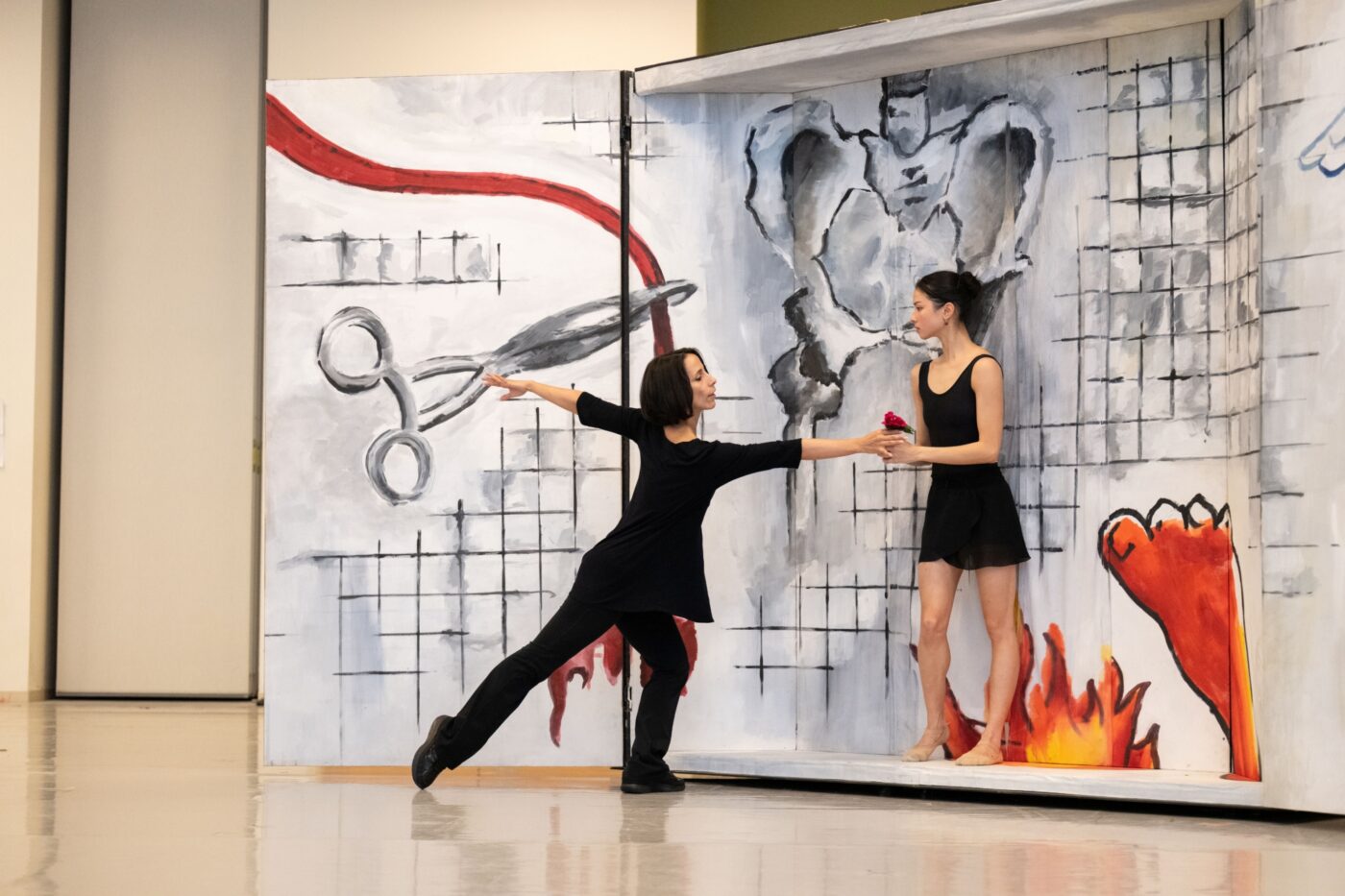
Spurred by a tragic accident that left her bedridden at 18, Frida Kahlo began to paint. Intensely personal and introspective, Kahlo’s body of work reflects her fraught and complex life of chronic illness, politics, love, and pain. Creating the majority of her work in her lifelong home, the Casa Azul in Mexico, she drew influence from post-revolutionary ideology, Mexican folk art, and the Surrealist movement. Although Kahlo vehemently opposed this later categorization, claiming, “I never painted dreams. I painted my own reality,” her work not only reflected her life experiences but also refracted them.
It is Kahlo’s self-reflective and expressive practice that makes her work today both unique and universally resonant. In a similar vein, Annabelle Lopez Ochoa works from that same place of personal truth, stating, “The more personal I make it, the more universal it becomes. Pain and love are universal emotions.” She expands, “Even when I’m exposing something very private, people recognize themselves in it. They feel real emotion rather than the idea of emotion.”
Originally expanded from the 2016 production Broken Wings, which featured the concept of a woman damned or doomed, Frida has since been developed into one of the choreographer’s largest productions to date. It also marked the beginning of a career-long practice of profiling complex, primarily female historical figures in her choreographic repertoire. Most notably, her other biographical works include figures such as Maria Callas, Delmira Agustini, Eva Perón, and Coco Chanel.
In her biographical works, Lopez Ochoa devotes much of her time to research, immersing herself in biographies, memoirs, documentaries, diaries, and letters, and delving into the psyche of her subjects to make sense of them. Frida, however, is not an explicitly biographical ballet. Instead, Lopez Ochoa guides the audience through Kahlo’s life via her self-portraits, personified. The result is not a narrative guide through Kahlo’s life but rather, much like the physical media she produced, a window into someone and something else.
Paying homage to her own Latin American heritage, Lopez Ochoa’s choreography is at times angular, deliberately frontal, and reflective of the visual language of the Mexicanismo style that influenced Kahlo. This influence is not only aesthetic but personal; imagery associated with this tradition was present in Lopez Ochoa’s familial home, shaping an early visual awareness that echoes in her work. The body is thus flattened into something pictorial and two-dimensional, as if stepping into Kahlo’s painted world.
Rather than reconstructing a life in linear terms, Lopez Ochoa’s creative practice privileges fragmentation, symbolism, and embodiment. Her works often resist fixed interpretation, instead offering layered images through which audiences are invited to engage. In Frida, this approach becomes especially potent: Kahlo is not presented as a singular, resolved figure, but as a constellation of selves, each drawn from the iconography she so carefully constructed.
Rather than defining Kahlo, the work asks us to consider her as the complex female character she was and how she crafted her own image through the outline she left.
Limited tickets remain for Atlanta Ballet's production of Frida by Annabelle Lopez Ochoa, on stage for one weekend only from May 8 to 10, 2026. Live with the Atlanta Ballet Orchestra at the Cobb Energy Performing Arts Centre.
Program Notes by Margaux Nicolas.